Cantor's Column: L'Dor va Dor
by Marsha Dubrow (New York & New Jersey)
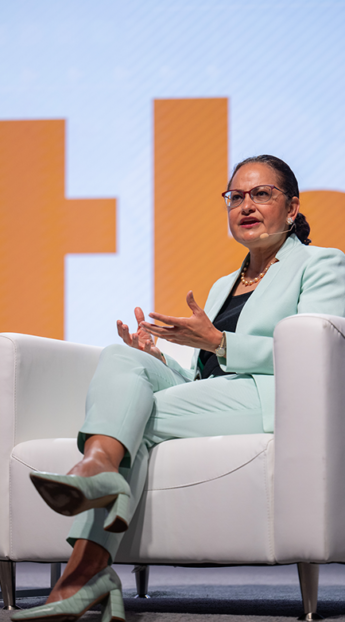
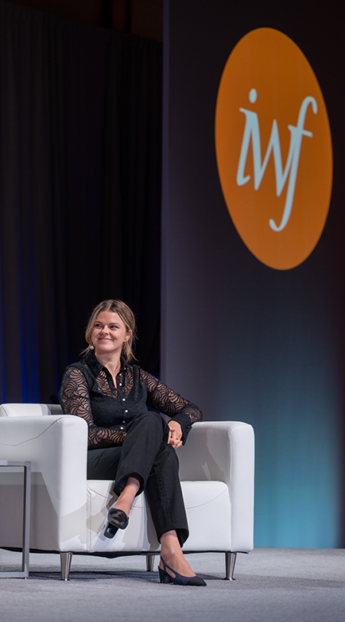
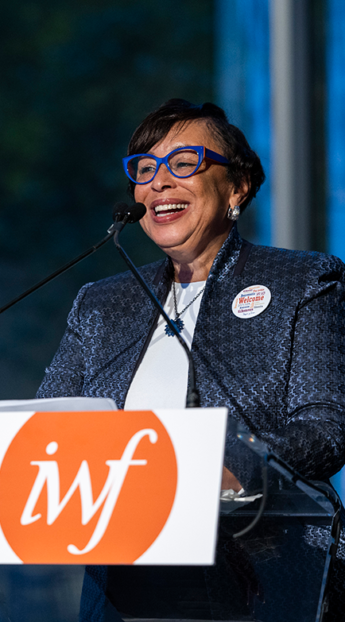
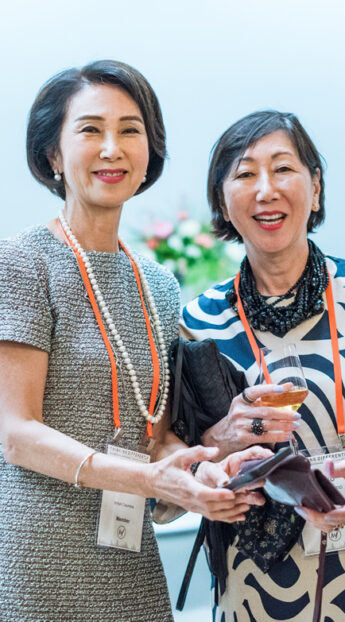
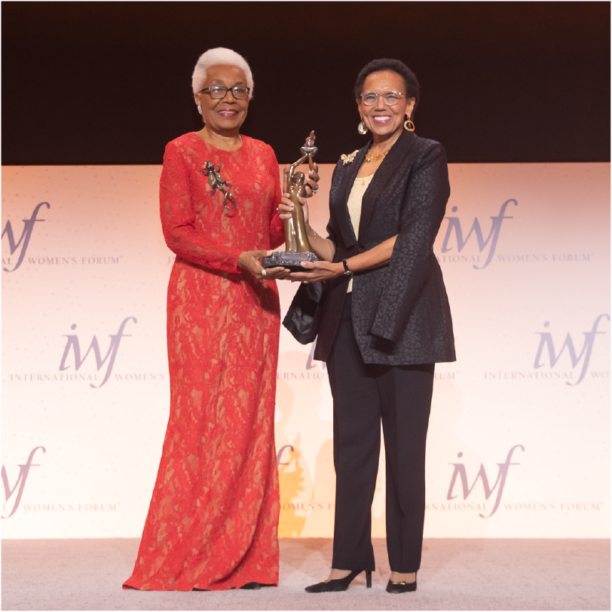
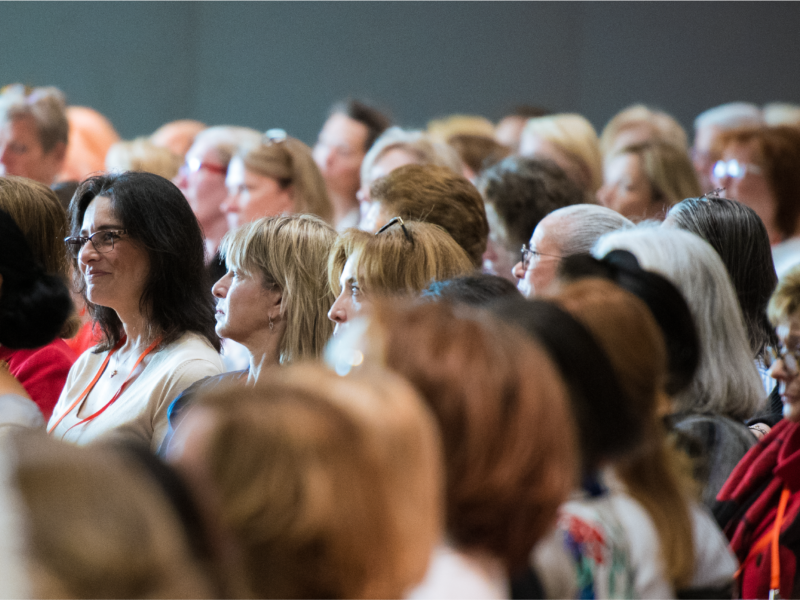
| I just returned from a week in Spain attending a conference of the International Women's Forum with delegates from 27 countries and 42 states. The subject of the conference was “Bridging the Leadership Gap: Empowering Families, Business & Civil Society” and there were over 400 women leaders from every walk of life in attendance: elected officials, lawyers, physicians, business and arts executives, college presidents, and even two cantors (myself included)! How fitting that such a conference should take place in Spain, a place where, although a very long time ago in the Middle Ages, a period of ‘Convivencia' (literally, ‘harmonious living') manifested in which Christians, Jews and Muslims lived together in relative harmony, leveraging each other's strengths and most positive attributes for the collective good of the community. This was the place where Maimonedes flourished and where Ibn Gabirol wrote ‘Shachar Avakeshka' (‘At Dawn I Seek You, Refuge') which we recite every Shabbat morning, and where many other Hebrew poets crafted their piyyutim, sacred poetic texts, including ‘Adon Olam' . Unfortunately, the period of ‘Convivencia' in Spanish history, came to an end in the 15 th century and was followed by the era of the Inquisition, one of the harshest and cruelest periods in the history of the Jewish people. The Inquisition's legacy created the most significant diaspora for the Jews since the destruction of the Second Temple in 70 C.E. Yet, there remain throughout Spain remnants of the Jewish presence that flourished during the pre-Inquisition period, and I had the good fortune to travel to two historic cities where the Jewish legacy is still palpable, Toledo and Segovia. In Toledo, I visited two synagogues, the first, Sinagoga del Transito , built in the 14 th century by Samuel Ha-Levi, the Jewish treasurer to Pedro the Cruel. “The interlaced frieze of the lofty prayer hall harmoniously fuses Islamic, Gothic and Hebrew geometric motifs below a wonderful coffered ceiling.” (Eyewitness Travel Guides) What better representation of the spirit of Convivencia ! The second synagogue, Sinagoga de Santa Maria la Blanca , is the oldest and largest of the city's eight original synagogues. It dates back to the 12 th century, but like all synagogues in Spain, after the Inquisition, it became a church, ergo its name. Today, it has been restored respectfully to its original form and houses a Jewish museum. In Segovia, I visited La Juderia , the Jewish Quarter, which is billed in the city's tourist brochure as ‘an example of tolerance'. Here, in the home of a Jewish converso , Doctor Andres Laguna, King Charles the First's doctor and an eminent scientist, is housed the Jewish Quarter Didactic Center. I also visited the Antigua Sinagoga Mayor , which, too, reflected the melding of Islamic, Christian and Jewish cultures. “For more than two hundred years Segovia had a densely populated Hebrew quarter, that was a model of communal living until a current of intolerance spread throughout the Iberian peninsula provoking the expulsion of the Jewish population in 1492. The clearest example showing that the life of the Segovian Jews was fully integrated in the city is the fact that, until a Royal Order was published that made it mandatory, there was no Jewish Quarter as such, but they lived freely in all the city's parishes. Only in the last few years of their stay in Segovia were they intimidated to live in a restricted quarter of ghetto” (Turismo de Segovia brochure) On the second to last evening of my stay, Motse'ei Shabbat, as the conference attendees were milling around the lobby of the Palace Hotel in Madrid, where we were staying, my colleagues and friends from the Israel Women's Forum called out to me, “Marsha, come quick, come quick. Look! A bar mitzvah party!” And sure enough, right there, in the middle of the Palace Hotel's renowned rotunda, was a Bar Mitzvah boy and all his friends and relatives celebrating a glorious Jewish tradition. Later that evening at dinner, my Forum colleagues invited me to share the Motzi with them before we began to dine. Excitedly, surrounded by Christians, Moslems, Jews, and perhaps a few Buddhists, Hindus, Agnostics and Atheists, I taught the Motzi , translated it, and together in an expression of Convivencia, some seven centuries and many, many generations later, we all broke bread together. Next year's conference will be in Amman, Jordan. There, I hope to teach my International Women's Forum colleagues the Niggun I taught to our congregation on May 5 th , the evening of our last congregational supper and Friday evening Shabbat service. A Niggun has no words, no text, nothing to offend anyone, only beautiful music, the universal language of healing. And perhaps Convivencia will come to the Middle East. For now, though, please join us here during Shavuot on June 2 nd for a second special musical Shabbat. I look forward to seeing everyone! |
Copyright © 2007 International Women's Forum. All Rights Reserved
Designed @ Ingenux
Designed @ Ingenux